During my trip, I received numerous insightful questions from friends and family. I thought it might be helpful to share some of these questions—and my answers—for anyone else who’s curious.
Q&A
A Typical Day
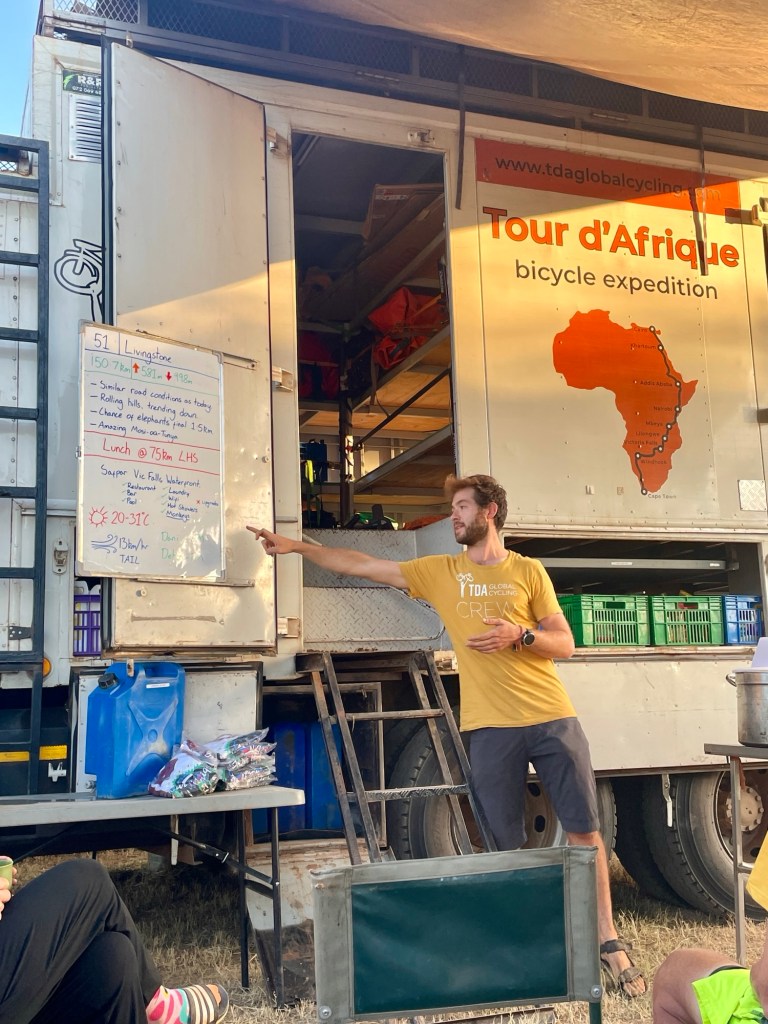
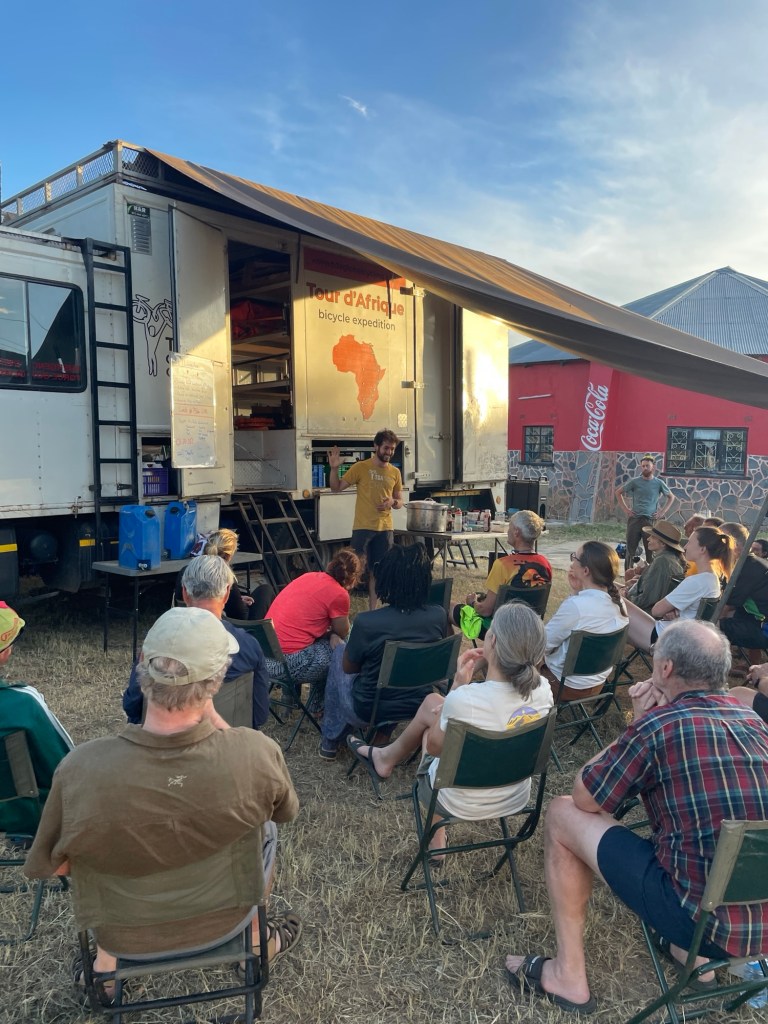
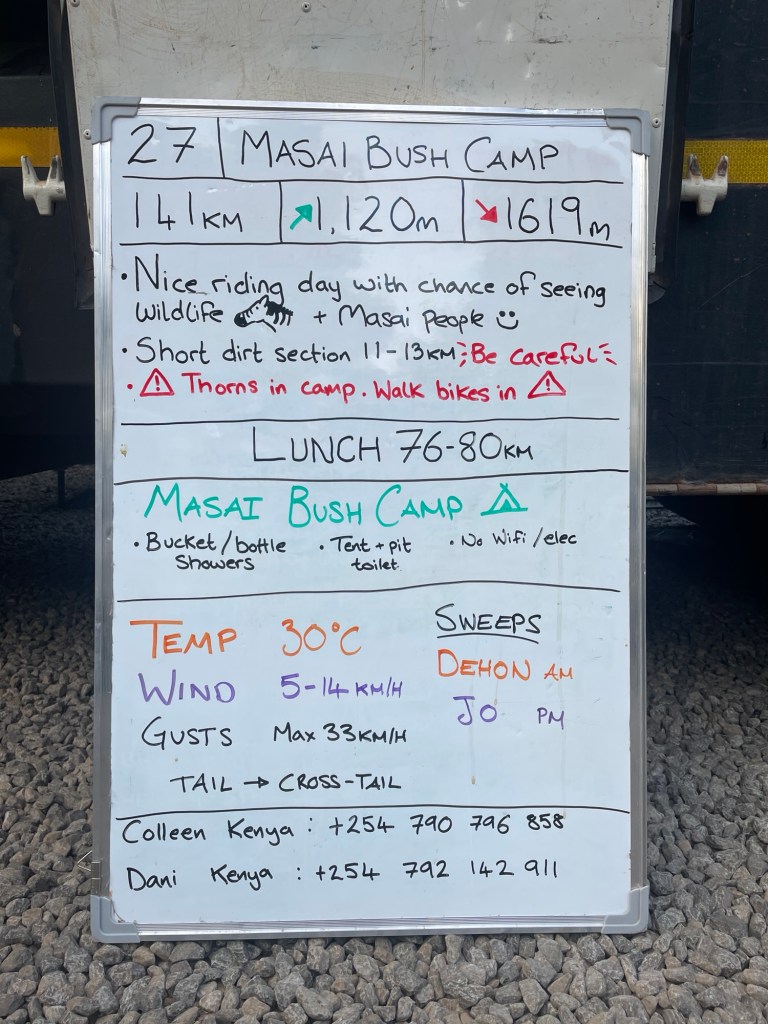
Each day on tour is remarkably similar—think military operation (!) in terms of timing and logistics. The evening before each ride, we have a detailed briefing led by our tour leader. We review the upcoming route: distance, elevation, weather, road conditions.
Daily Routine:
- 5:00 AM – Wake up, break down our tents, pack gear, prep bikes, and lather on sunscreen.
- 6:30 AM – Breakfast
- 7:00–7:30 AM – Start riding
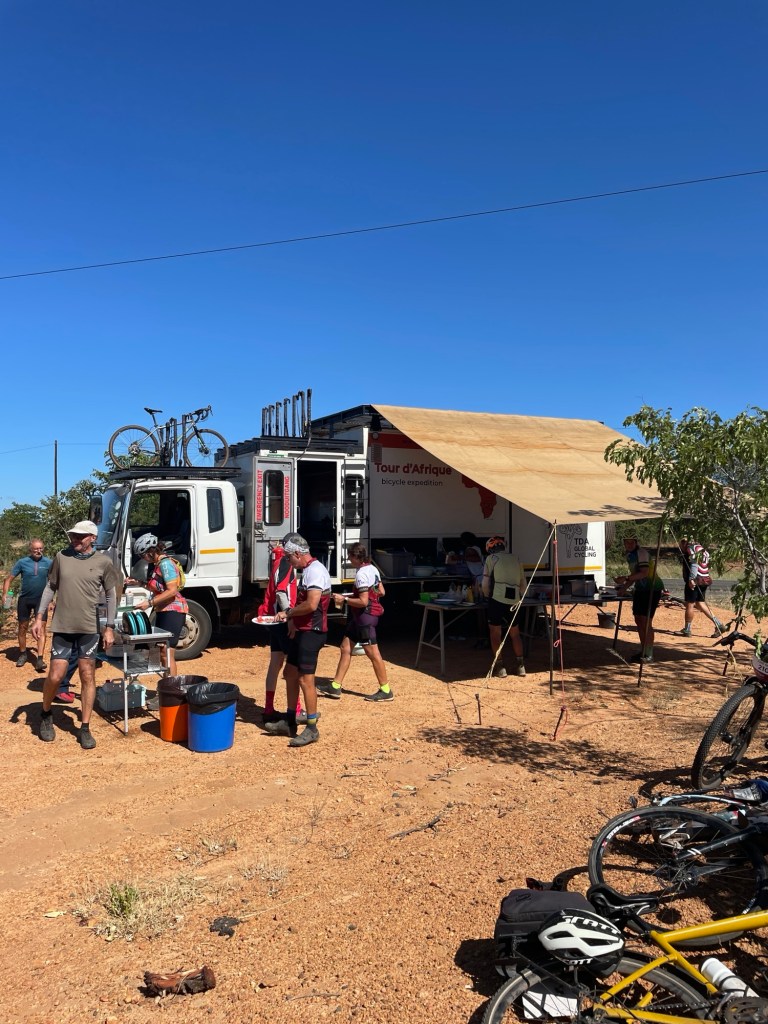
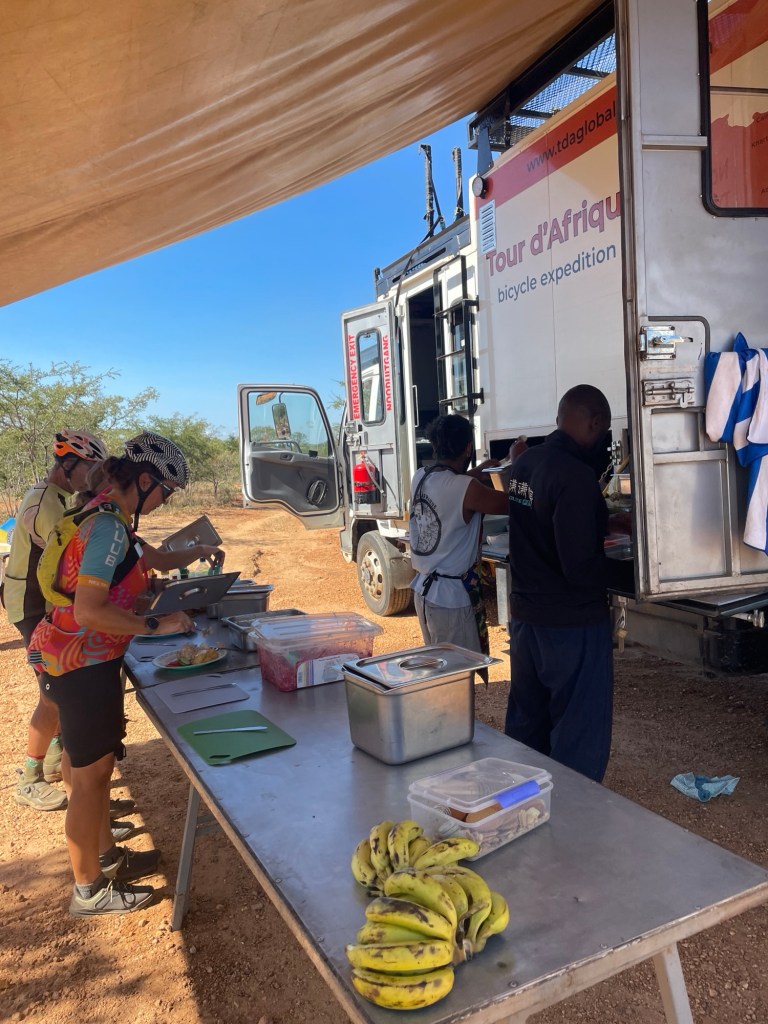
- Lunch: is usually at the halfway point, provided by an advance tour vehicle. We carry most of our water but can refill at lunch or when a support vehicle passes.
- 3:00 PM—Arrive camp after spending 6–7 hours actively pedaling (🥵🤯). Once at camp, the day’s not over: it’s time to set up my tent, shower, and charge electronics, tune bicycle.
- 5:45 PM – Ride briefing
- 6:15 PM – Dinner
- 8:00 PM – Bedtime
——————-
Tour Logistics
How is the tour organized? How do we eat/cook?
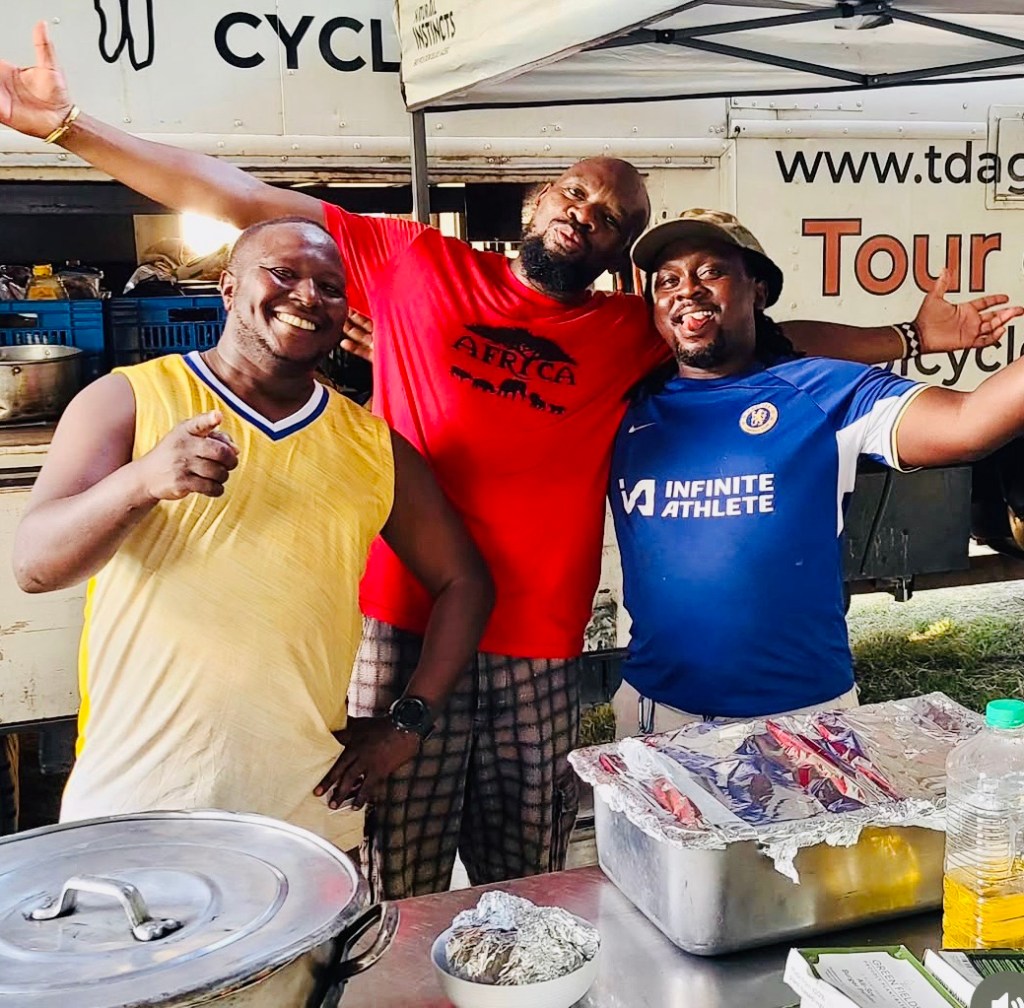
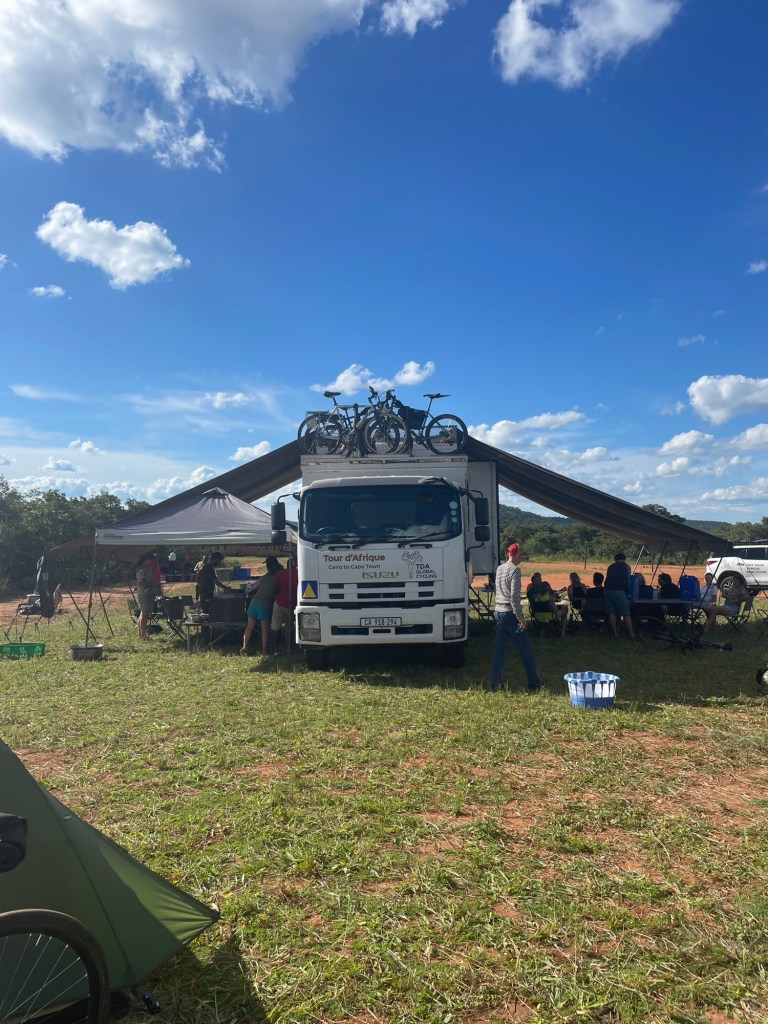
There’s a crew of 12 people and 4 support vehicles managing 33 cyclists. The team includes: 2 Tour Leaders, 2 Cooks, 1 Medic, 2 Drivers, 1 bike mechanic, 4 Support Staff.
This is a complex operation, especially because we’re often riding through remote areas with limited access to water, electricity, or supplies. The crew is incredibly well-trained and equipped, operating out of two large cargo trucks used for cooking and transporting gear. The food is amazing, especially considering the challenging environments (many sites have no electricity!). See below specific section on food for more details. The tour is operated by TDA, a phenomenal bike specific tour company based in Toronto.
——————
Security & Safety
Is there any security—either for personal safety or wildlife protection?
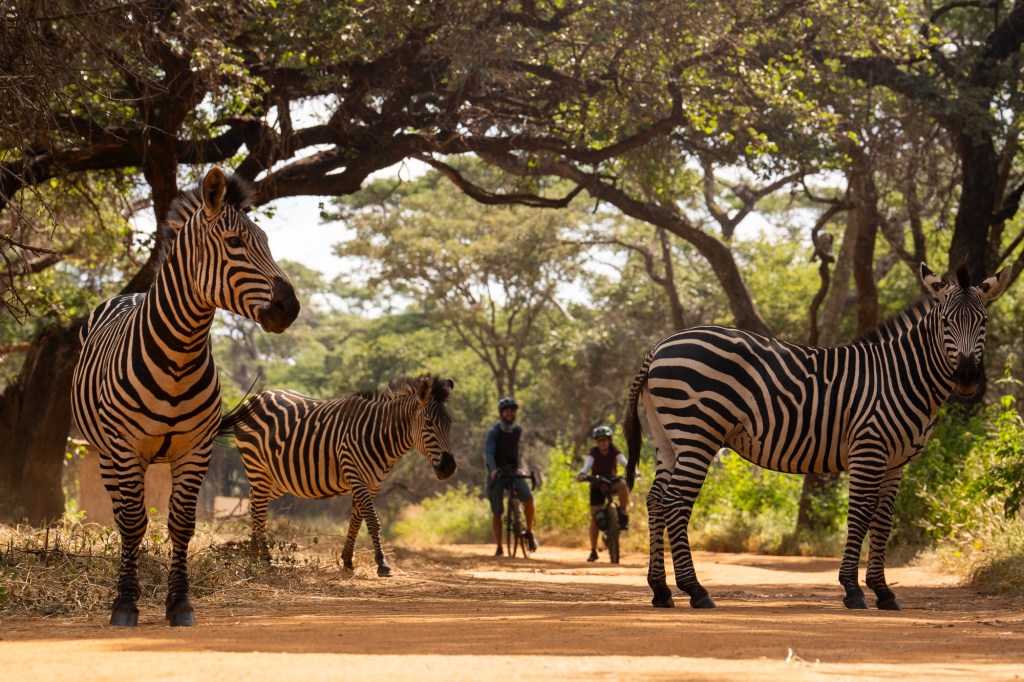
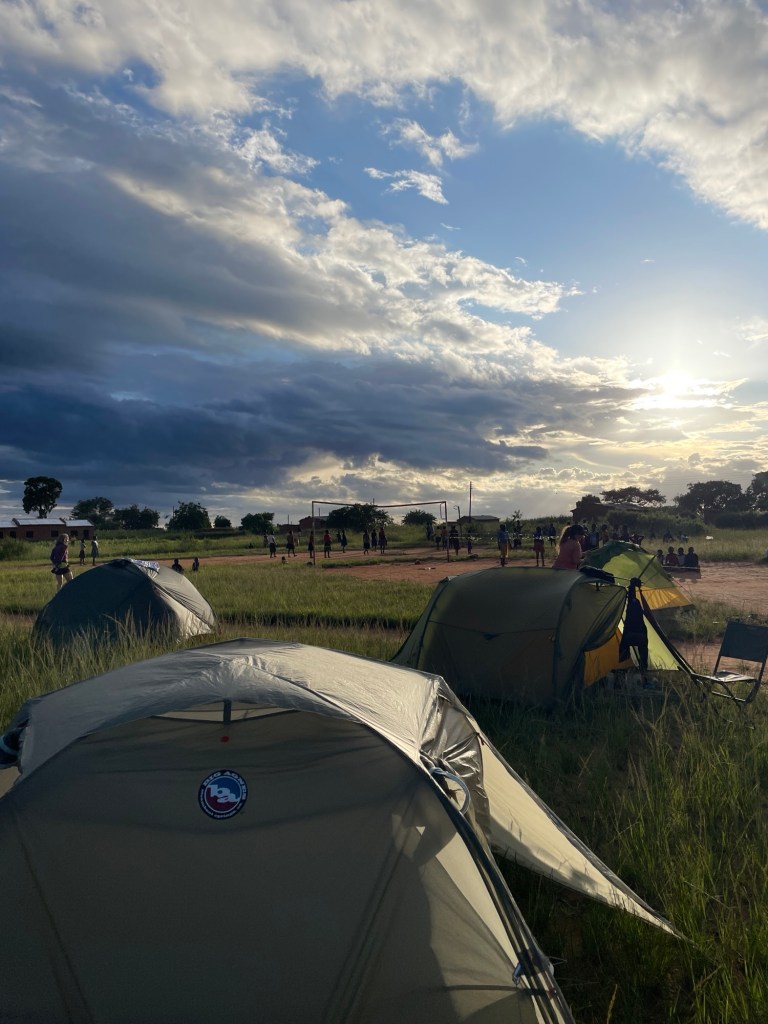
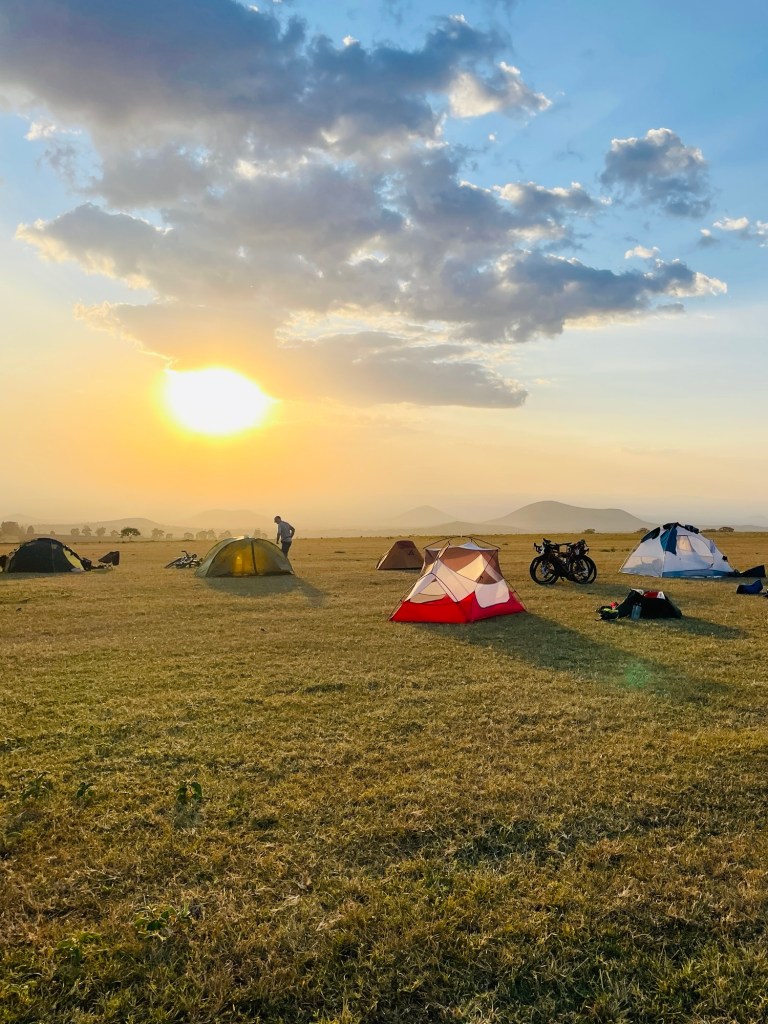
Nope. We often camp in the bush with no fencing, but here’s the key: humans aren’t part of the food chain for large animals like lions. They tend to avoid us for their own safety.. That said… I still cross my fingers and hope for the best! 😂. As for personal safety, I’ve spent several weeks traveling across Africa—from tiny rural villages to bustling capital cities—and I’ve never felt unsafe or uncomfortable. People have been consistently friendly and welcoming across every country. Many are just confused by the sight of some random Mzungu (foreigner) in spandex!
——————
Road Conditions
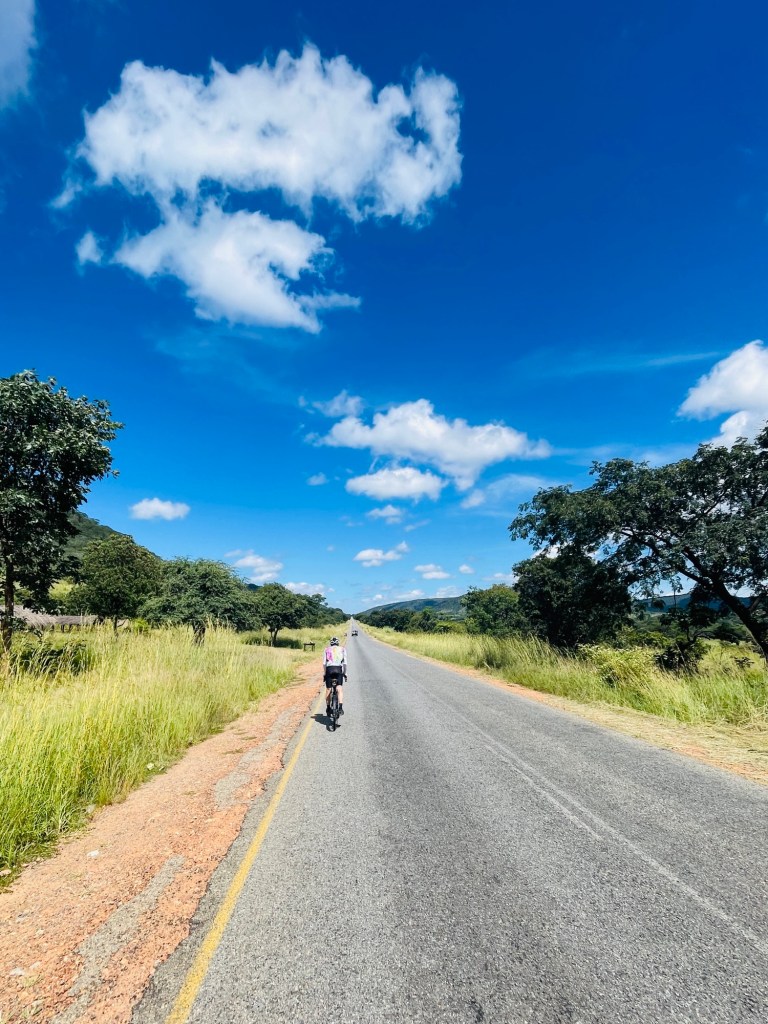
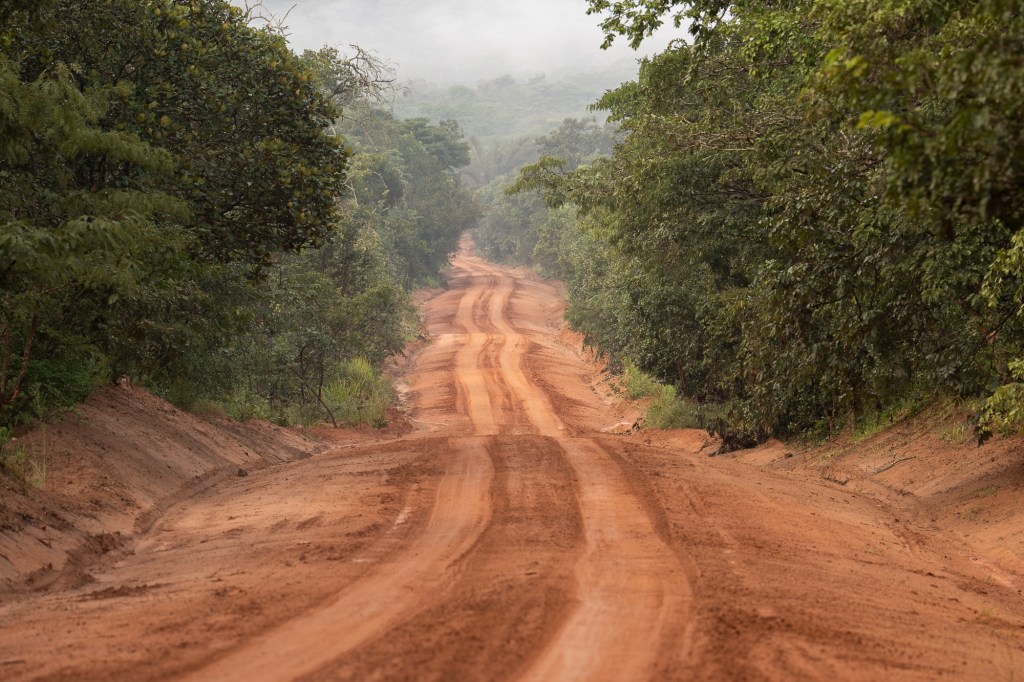
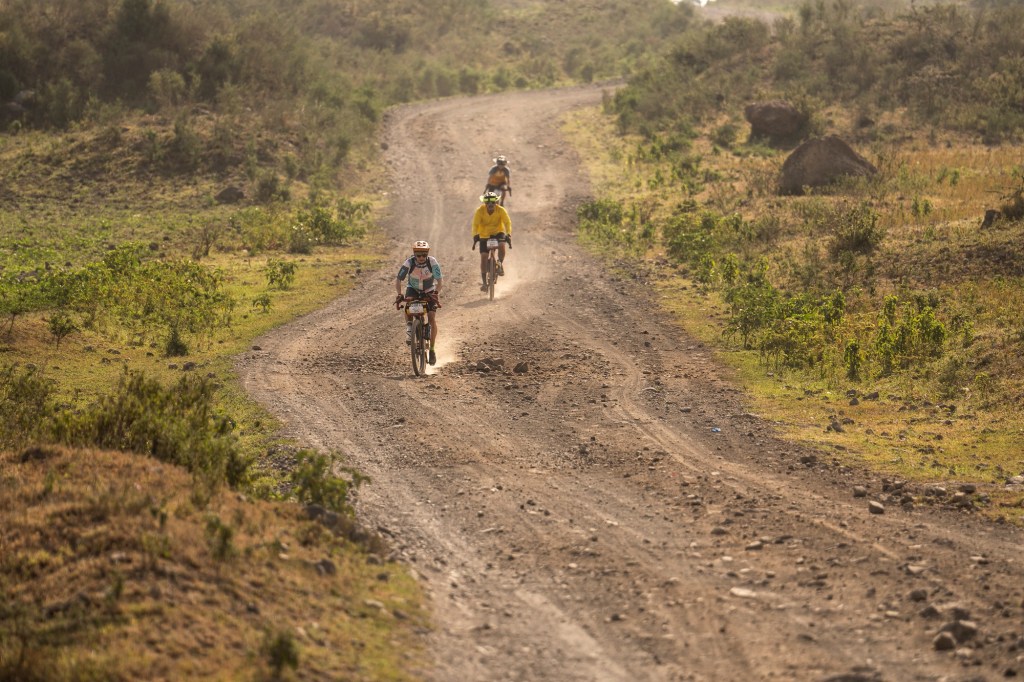
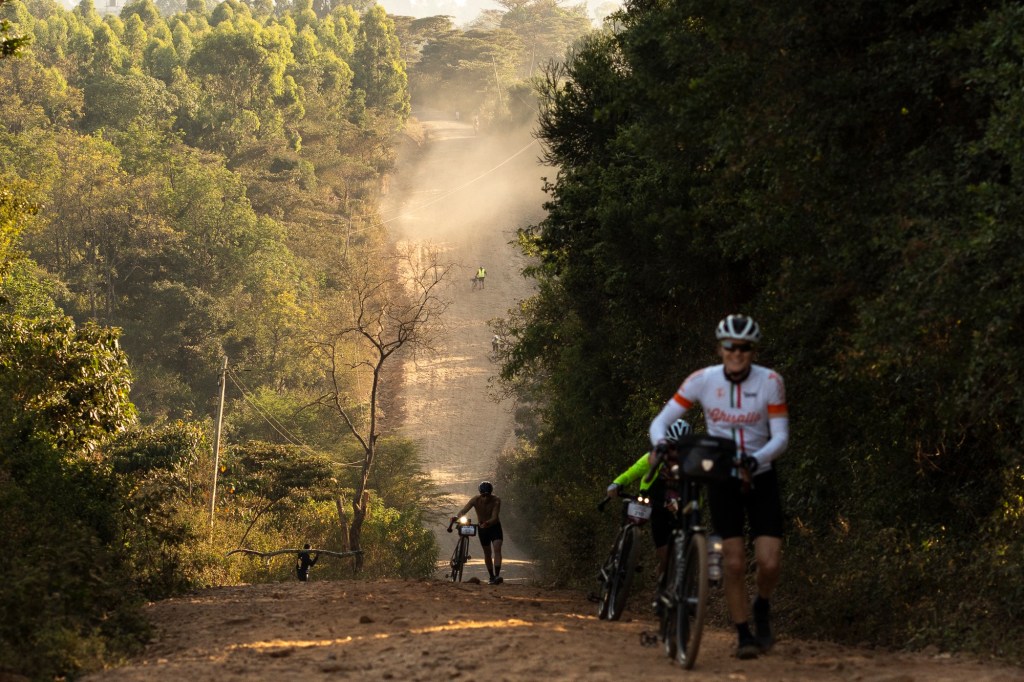
This has honestly been one of the toughest elements of the journey. Roads range from beautifully paved (thank you, China!)—about 60%—to downright brutal gravel roads. By “gravel,” I mean rocks. Sharp, pointy, sometimes massive rocks. Or loose dirt and sand. These roads have caused me more stress than anything else (HEAT is the runner up). A lot of my energy is spent just trying not to crash—which, for the record, has happened. Twice. I take it day by day and just keep pedaling forward.
——————
Weather
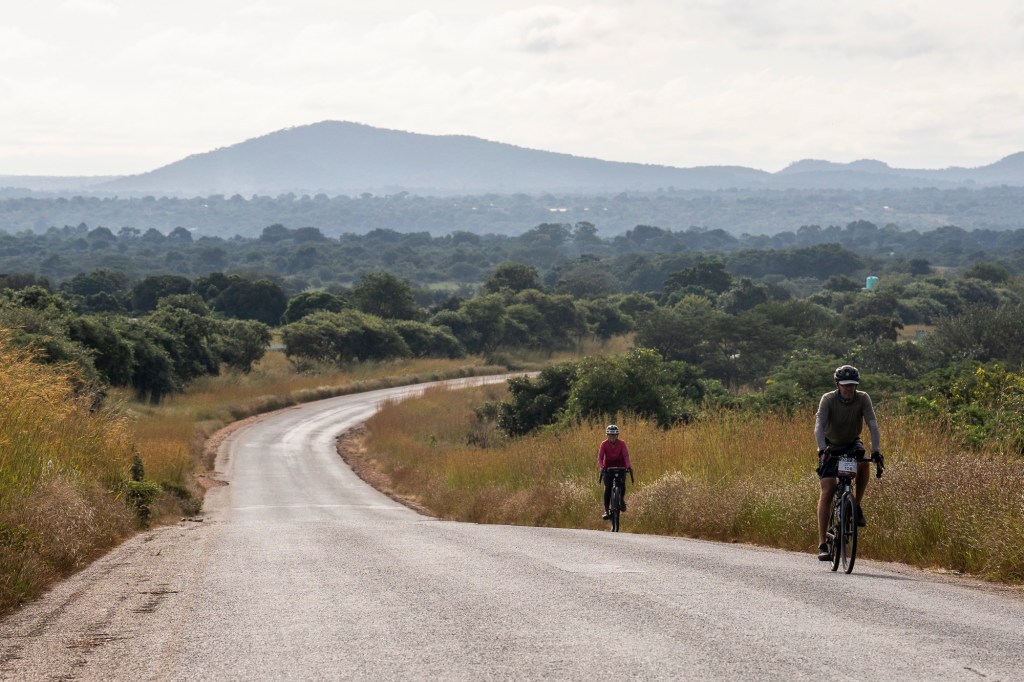
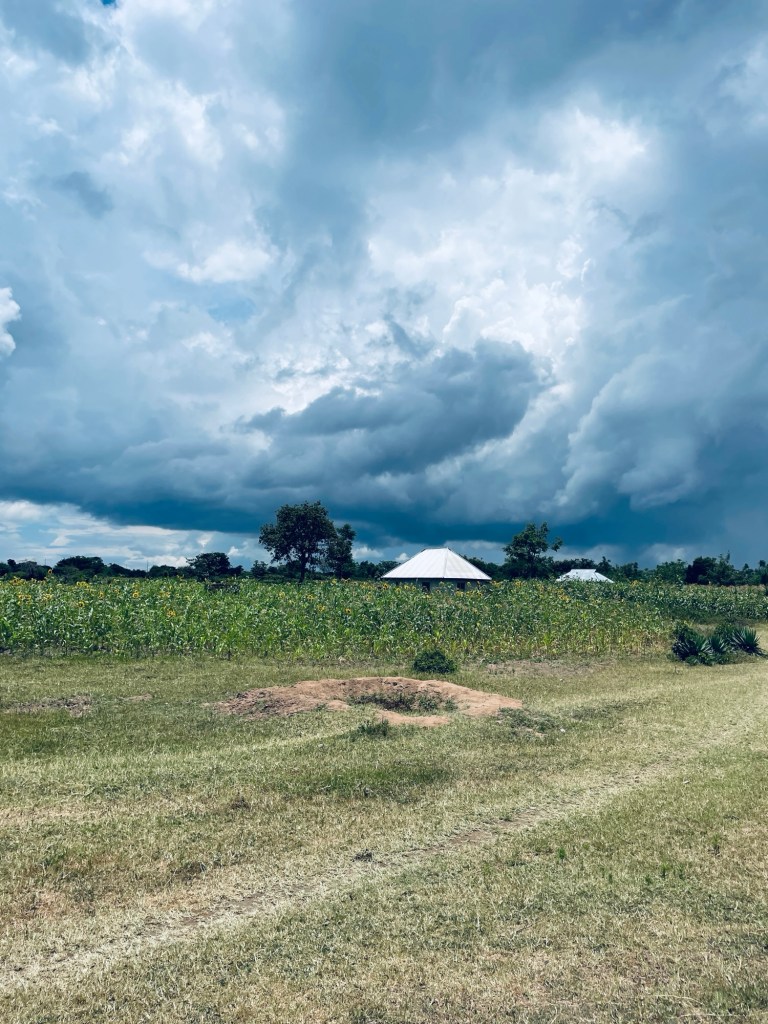
Would you believe we rode through a hail storm in Tanzania?!! 100% true. Black clouds rolled in, temps dropped, and then—hail. My friend and I found shelter in a tiny two-building village. Other than that, we’ve had some rain (mostly at night), but the days have been hot. By 11 AM, the heat radiating off the pavement is brutal—90s°F / 30s°C. Thankfully, the nights are cooler. I’ve written about the heat in most of my posts as it really has been a daily battle. Some days it seems I spend as much time pedaling as I do hydrating…it gets exhausting. The largest issue is that by late afternoon I often feel as if I’m teasing with heat exhaustion.
⸻
How Do Locals React?
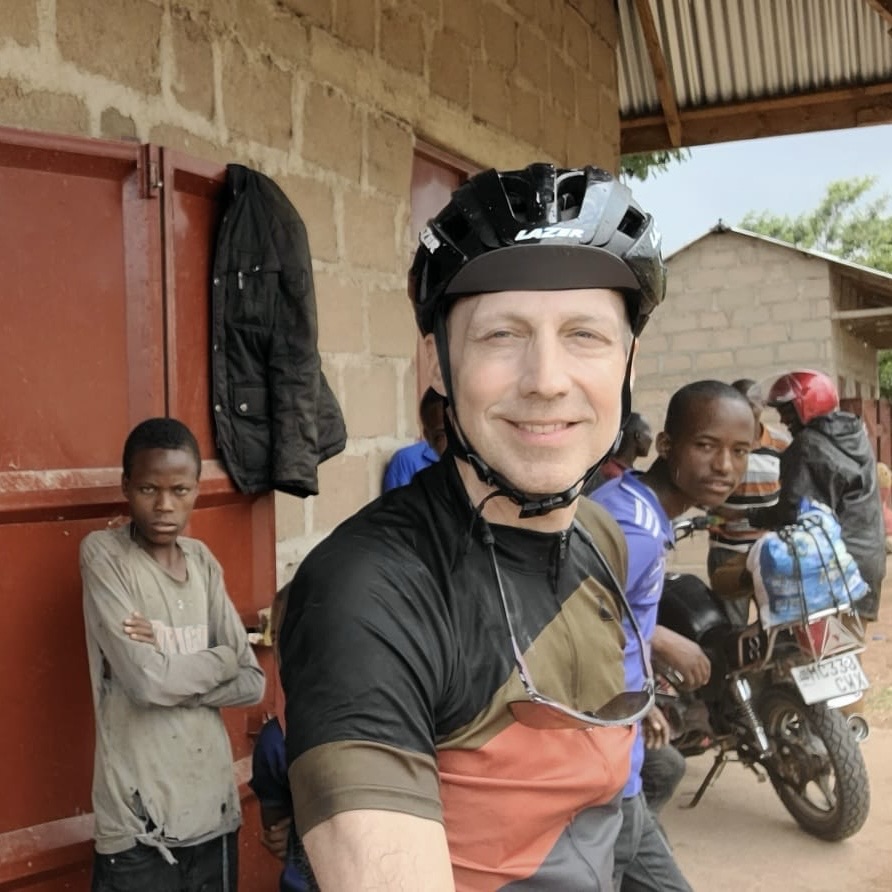
No matter the country or town, the response has been overwhelmingly warm and enthusiastic. We’re greeted with huge smiles, waves, stares, and sometimes complete jaw-dropping astonishment. Some folks just can’t figure out what we are or where we came from. As I’ve posted before, the kids are the best part. Their shrieks and screams of joy are absolutely infectious. It’s beautiful—and, honestly, a little exhausting! I try to greet every single “HELLO!” and “HOW ARE YOU?” yelled from the roadside, and on some days, I pass hundreds of kids. But I’ll gladly take that energy any day.
⸻
Sleep & Camp Setup
I’ll share a separate video for this, but here’s the short version:
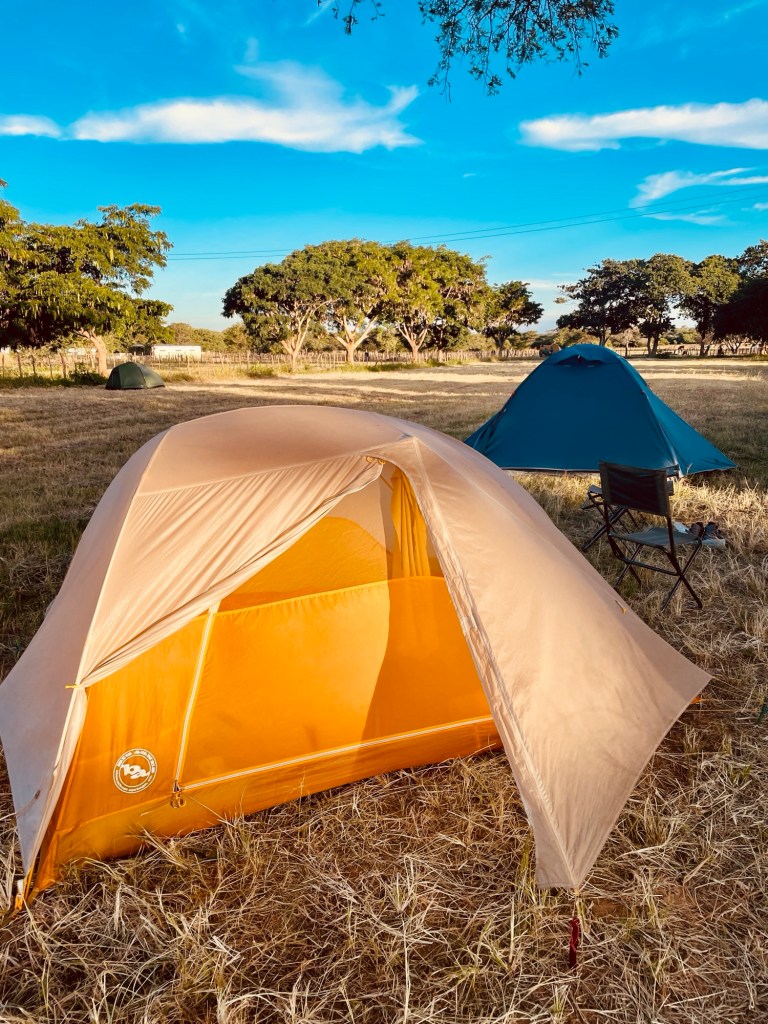
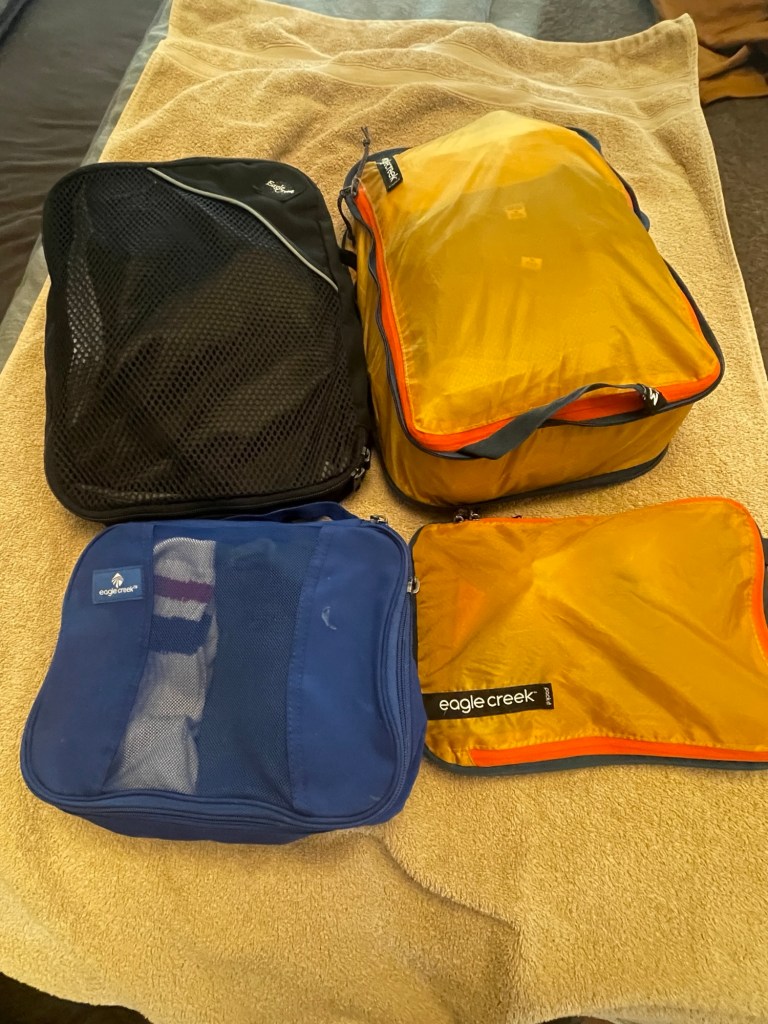
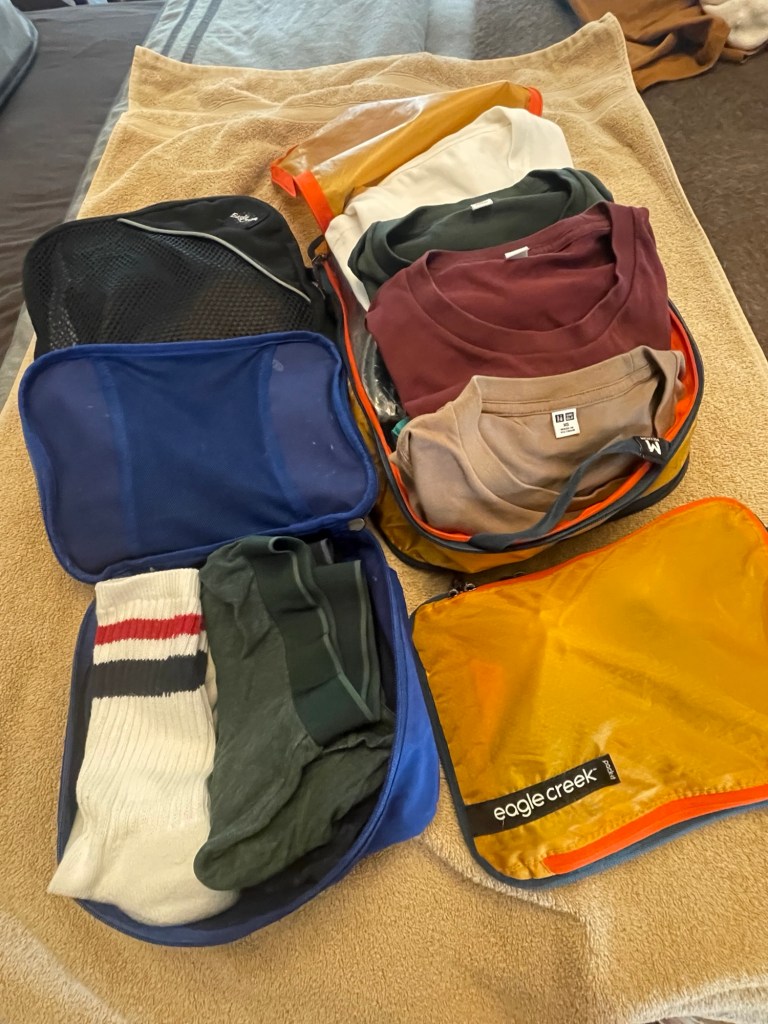
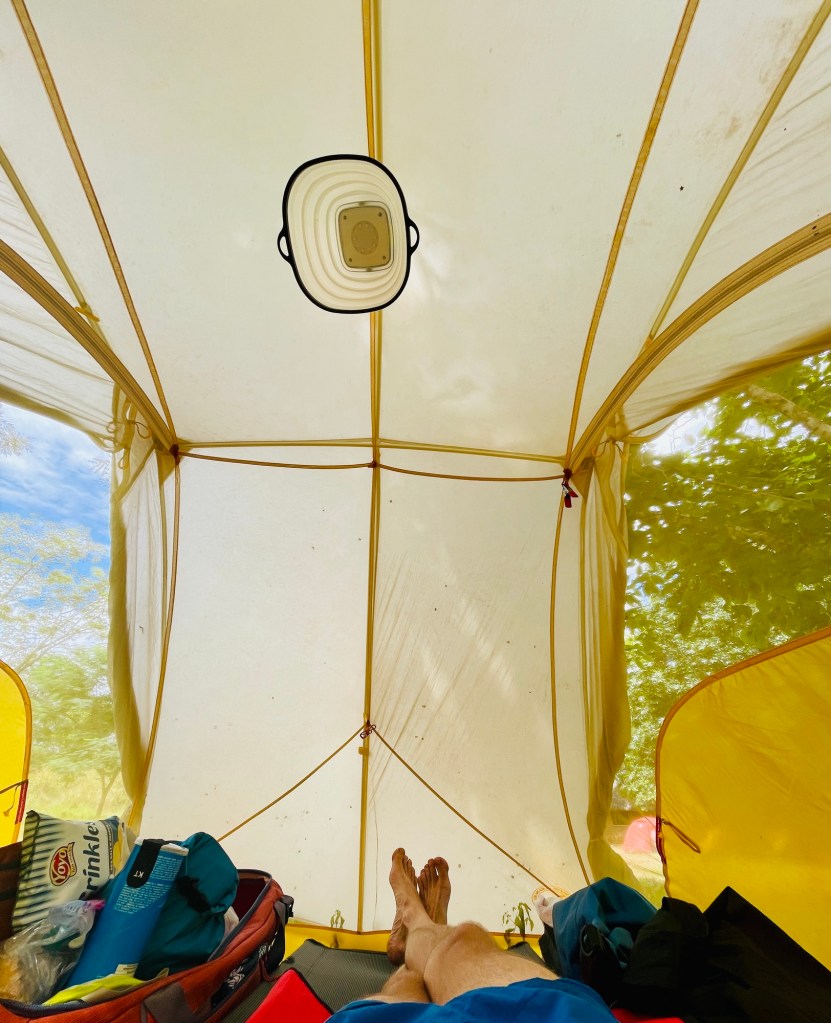
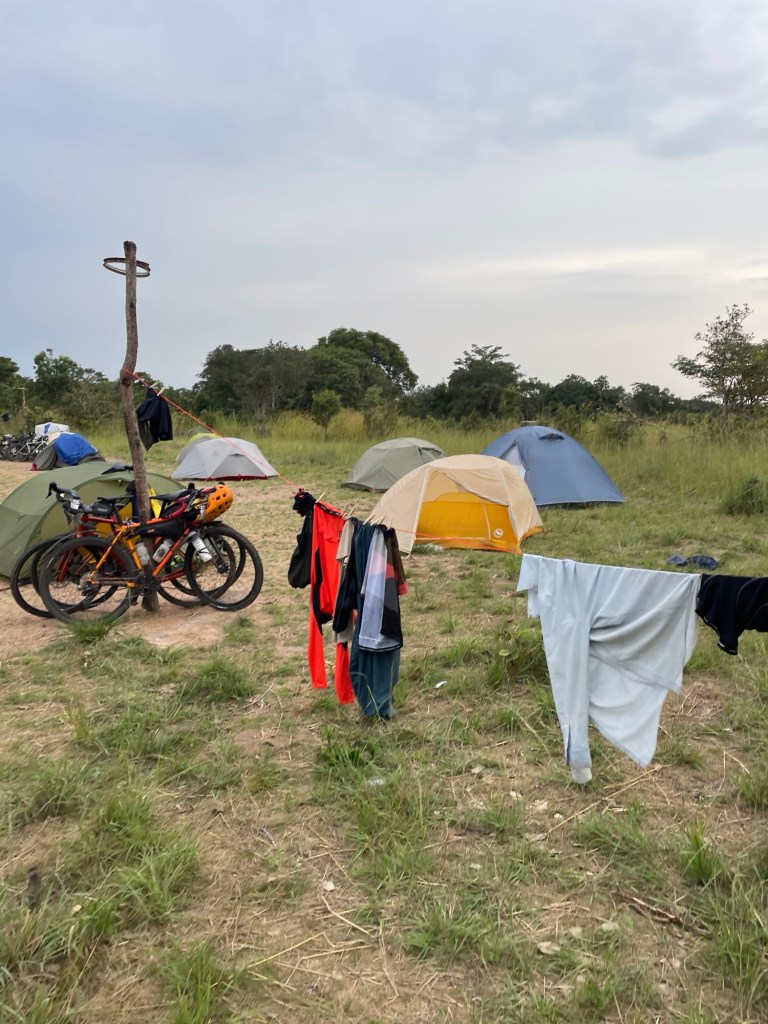
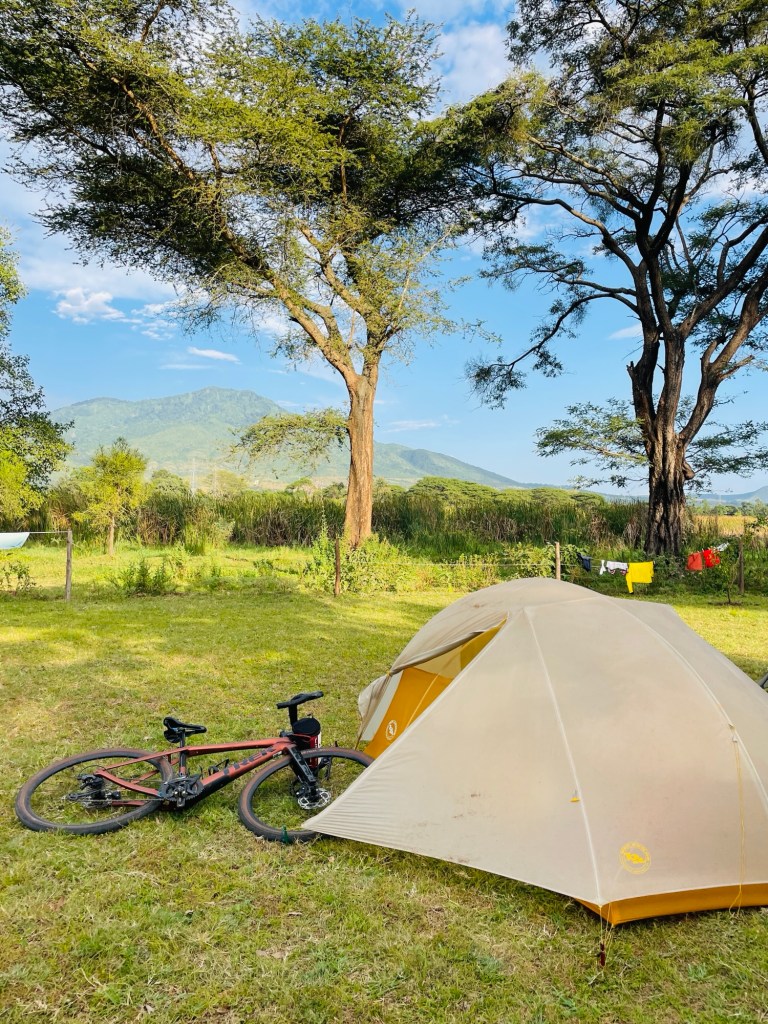
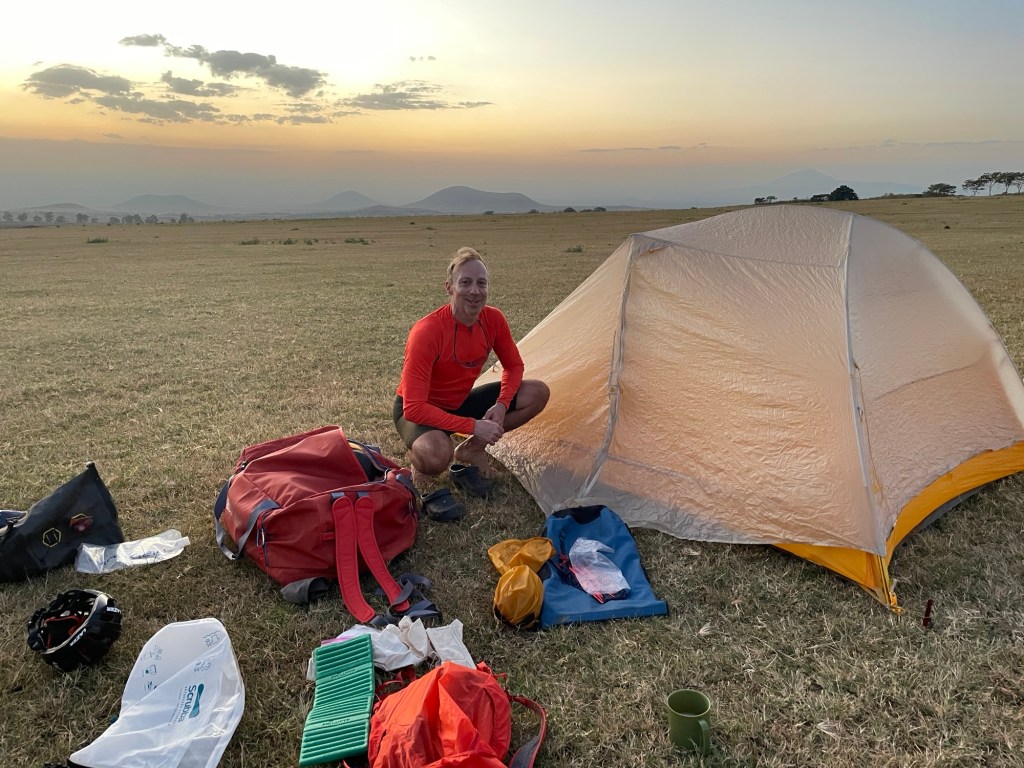
I brought my own tent—it’s labeled as a 3-person, which actually means it fits 1.5 people. 😅 I’m responsible for setting it up and taking it down every day. As for sleeping: most people use inflatable pads, but I’ve never had great luck with them—they deflate or get punctures. Instead, I use a Helinox lightweight backpacking cot. Total game-changer. It’s compact (packs down to the size of a yoga mat), super easy to set up, and keeps me about 4 inches off the ground. Best sleep ever. Another absolute must-have: packing cubes from Eagle Creek. If you’ve traveled with me, you already know I’m obsessed with them. I’ve used them for 20 years and they keep my life organized while traveling. Each cube holds a category—shirts, shorts, underwear, etc. They keep me so organized. I swear by them!
⸻
Food:
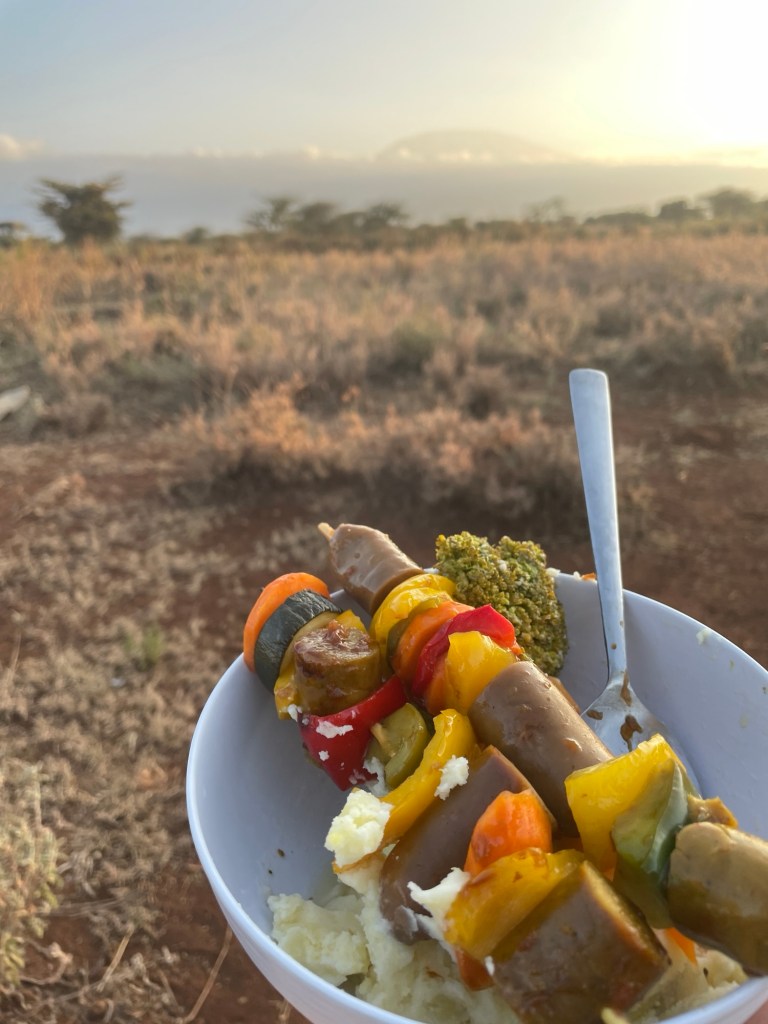
Ah, the big question everyone’s been asking! The cooks do an amazing job, especially considering the limited access to power and resources. As for the “menu,” it’s generally a wide range of international dishes that most of us are familiar with. Occasionally, there are African-inspired meals as well. The food tends to be carb-heavy—think lots of pasta, rice, potatoes, and legume-based dishes. We’ve had everything from shepherd’s pie, lasagna, ratatouille to crispy baked potatoes and stuffed butternut squash. Meals do include animal protein as well. One of my favorite African dishes they serve every now and then is Kenyan Lentil Ndengu Curry—a delicious blend of spices and flavor! Lunch usually features a variety of vegetable salads, tuna salad, egg salad, and the like. Breakfast is pretty basic: oatmeal, yogurt, fruit, and occasionally pancakes and eggs. For snacks, I often make peanut butter and Nutella or jelly sandwiches—can’t go wrong with the classics! But my new obsession? VEGEMITE & butter sandwiches. They are soooo good!
The surprise to many is that I’m vegetarian and don’t take any supplements. I just eat a hearty, balanced diet full of plant-based protein—lots of beans, lentils, and nuts. I don’t track calories and try to eat as much as I can, though interestingly, I sometimes don’t have a huge appetite. That said, I’ve already lost 7 pounds—and I didn’t have much to lose to begin with!
⸻
Bathrooms and Laundry:
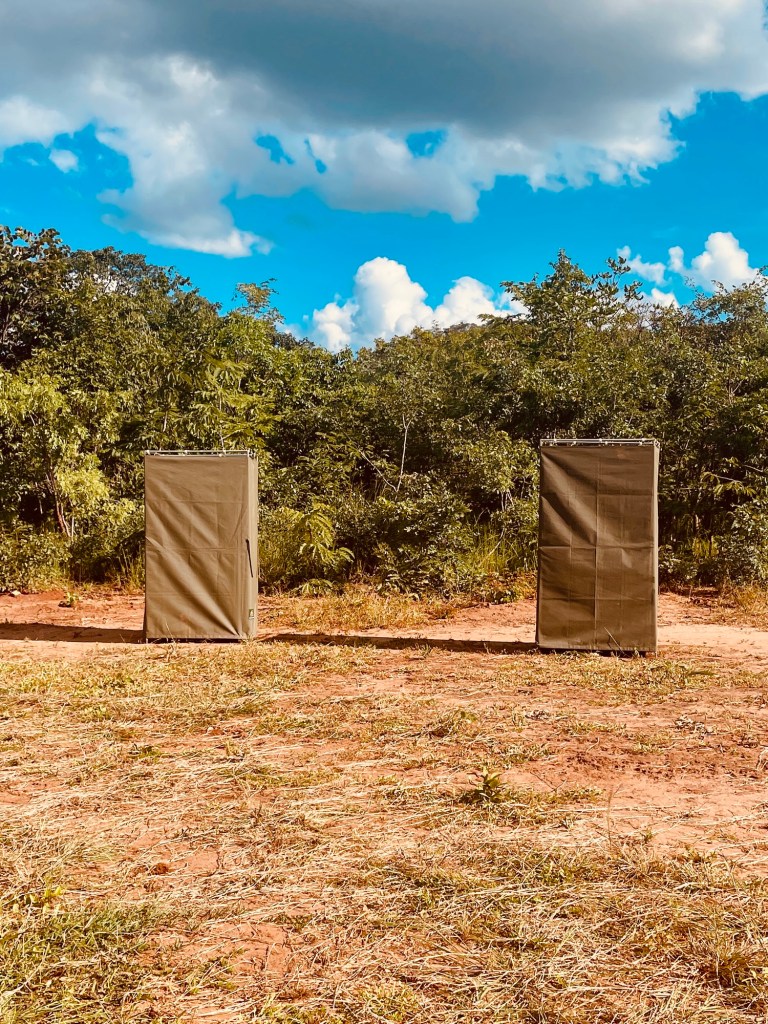
Now this kind of travel isn’t for everyone! I’ve mentioned it before, but in bush camps (which make up about 70% of our stops), there are no facilities whatsoever. Just open fields—no electricity, no running water, no plumbing. In those cases, the crew hauls out the auger—a gas-powered, hand-held digging tool that works like a giant corkscrew. Why dig a hole? That’s the bathroom! They dig a few and set up small tent-like structures around them for privacy. Yup, it’s a pit toilet in its rawest form—but you get used to it quickly. As for showers, we’re usually allotted about 1 liter of water each at bush camps. It’s amazing how far you can stretch it once you get the hang of it.
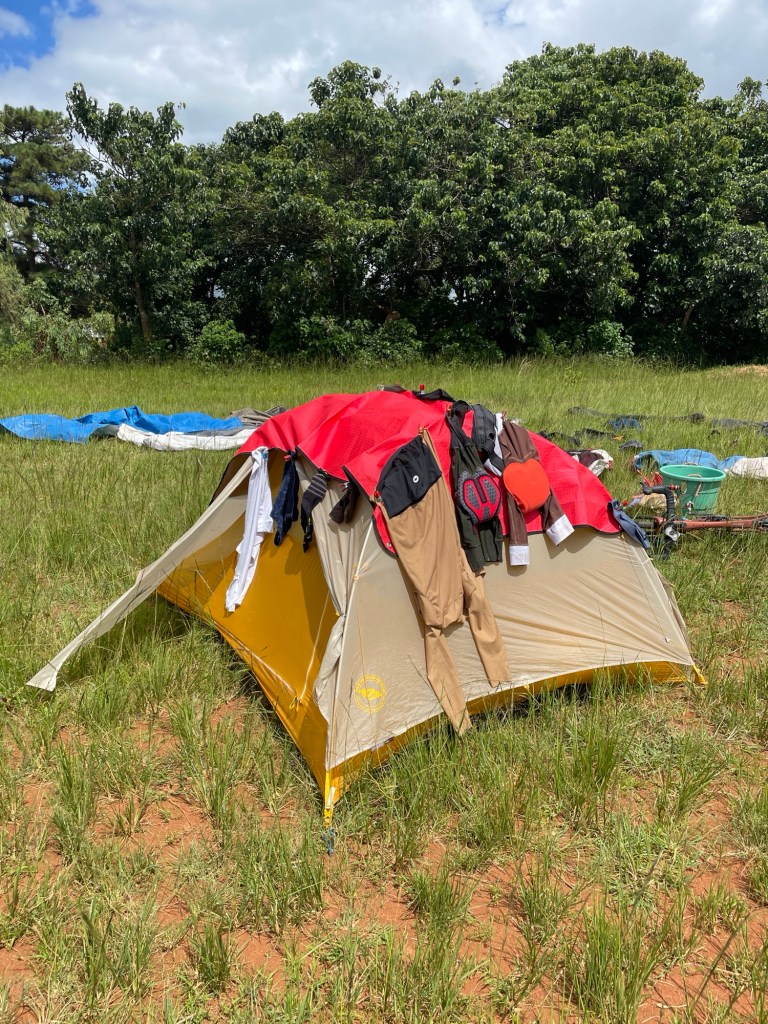
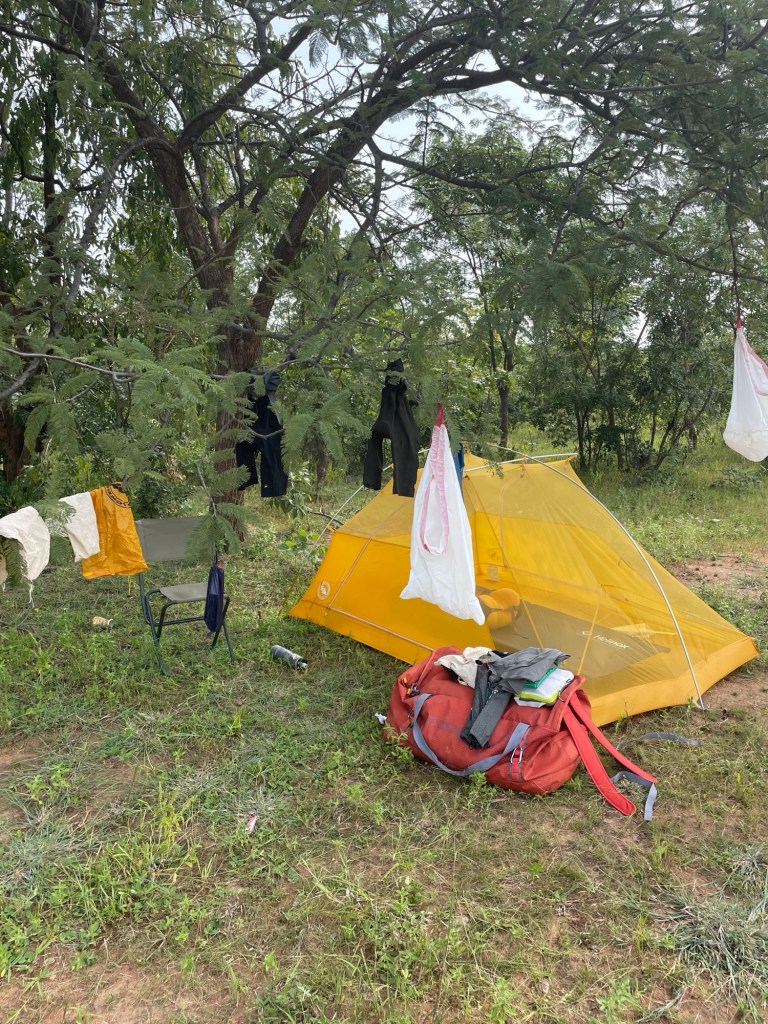
Laundry-wise, I typically wait until we hit a rest day where we’re at a location with plumbing. I mostly hand wash and hang dry—there just aren’t many other options out here.
Hopefully this answers many of the questions you’ve been wondering about! If there’s anything else you’re curious about—just ask!
 Globe Skipper
Leave a comment